
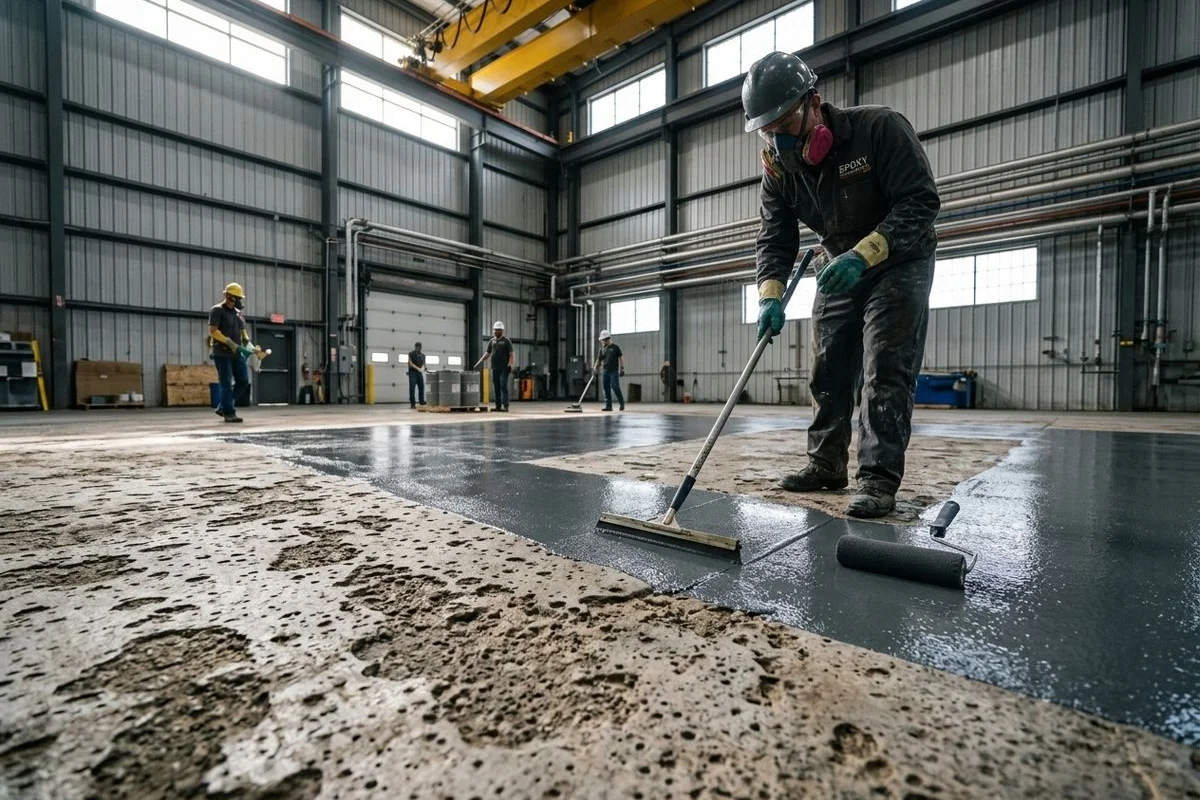
Expert Solutions for Chemical-Damaged Industrial Floors in Warren, MI
Repair and protect chemically damaged concrete in Warren's automotive plants, plating operations, and chemical storage facilities with novolac epoxy and vinyl ester systems.
When Standard Epoxy Is the Wrong Answer for Warren Facilities
Walk into a Warren plating shop on Van Dyke, a battery charging area at a Mound Road warehouse, or a chemical processing bay in the I-696 industrial corridor and propose a standard bisphenol-A epoxy floor system. Any experienced coating contractor will tell you the same thing: it will not last. Standard epoxy has a well-documented limitation — it performs adequately in mild chemical environments and fails relatively quickly in environments with concentrated acids, aggressive solvents, or elevated-temperature chemical exposure.
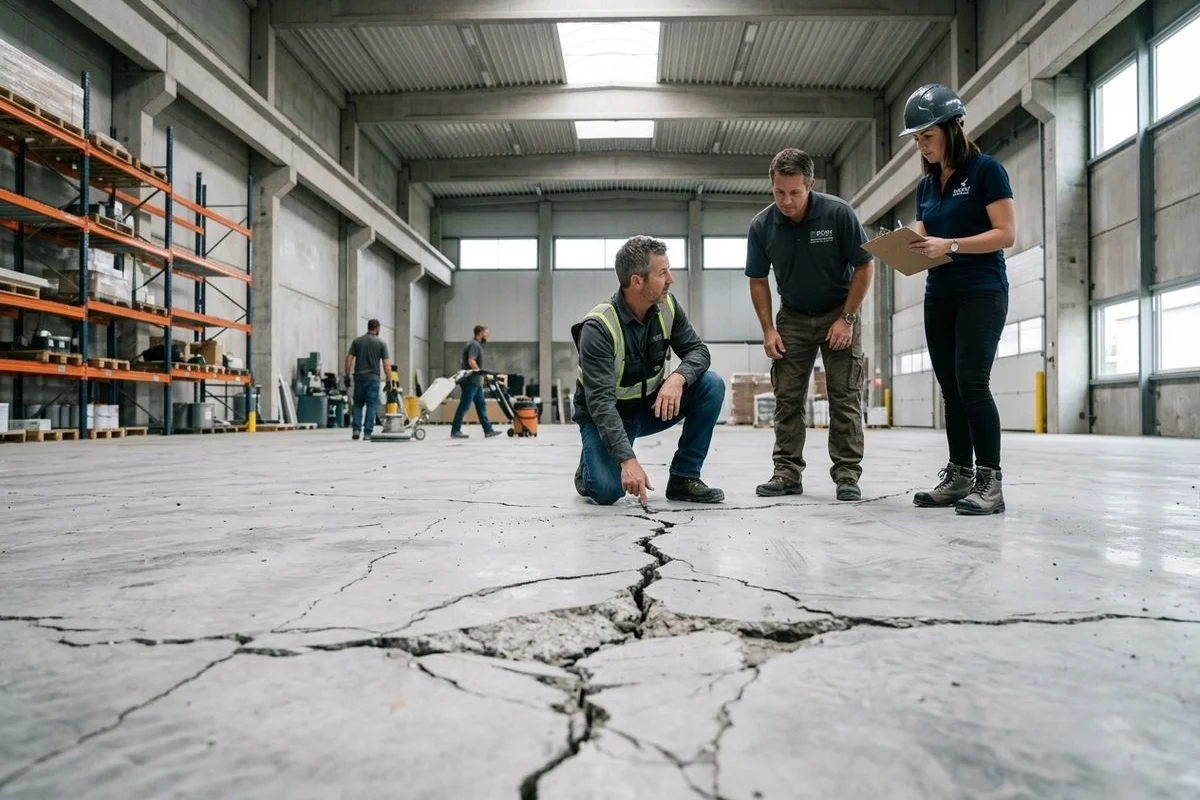
The concrete beneath those Warren environments tells the story of what happens when the wrong floor system is specified or the floor is left unprotected entirely: pitting, surface erosion, aggregate exposure, and in severe cases, structural deterioration of the concrete slab itself. Many of Warren’s manufacturing facilities have operated since the 1950s and 1960s, accumulating decades of cumulative chemical damage that no cosmetic coating can address.
Epoxy Flooring Pro repairs concrete damaged by chemical attack and installs the correct protective system to prevent recurrence — novolac epoxy or vinyl ester, specified against your actual chemical exposure, with secondary containment integration where required.
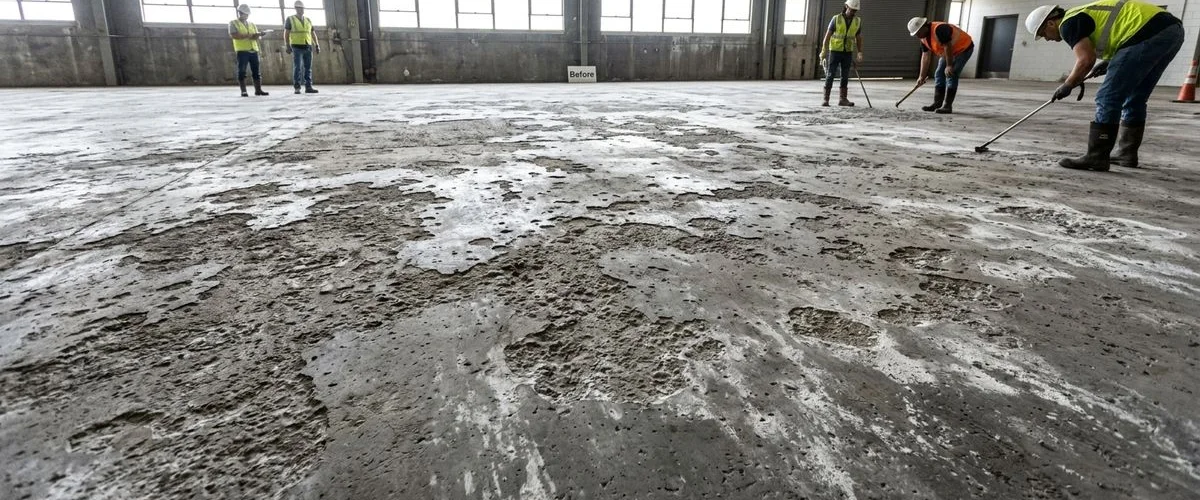
Understanding Chemical Resistance: Why Resin Chemistry Matters
Standard Bisphenol-A Epoxy
Standard epoxy resins — the chemistry used in most general-purpose industrial floor coatings — provide good chemical resistance to mild acids, mild alkalis, and some solvents. They are appropriate for environments with incidental chemical contact and dilute cleaning chemicals. They are not appropriate for the concentrated acid, aggressive solvent, and sustained immersion conditions found in many Warren industrial operations.
Novolac Epoxy
Epoxy novolac resins are produced by reacting epoxy with phenol formaldehyde novolac resin, producing a resin with a much higher crosslink density than standard epoxy. This dense crosslink structure delivers higher chemical resistance, higher heat resistance, and better long-term stability in aggressive environments.
Novolac epoxy floor systems are our standard recommendation for Warren facilities with:
- Sulfuric acid environments — battery operations, plating and anodizing shops along Van Dyke and Mound Road
- Nitric acid and mixed acid environments — chemical processing, laboratory, and quality control operations
- Organic solvent environments — automotive paint shop handling areas, parts cleaning, pharmaceutical operations
- Elevated temperature service up to approximately 180°F under most chemical exposures
- Aggressive CIP cleaning — food processing and distribution facilities using strong alkali wash-down systems
Vinyl Ester
Vinyl ester resin systems provide the highest level of chemical resistance available in a floor coating system. Where novolac epoxy provides excellent resistance to many aggressive chemicals, vinyl ester extends that resistance to chemicals that challenge even novolac — concentrated hydrochloric acid, chromic acid, many organic solvents at elevated temperatures, and bleach at high concentrations.
Vinyl ester systems are thicker, more complex to install, and more expensive than novolac epoxy. They are specified when the chemical exposure analysis indicates novolac epoxy has a resistance limitation for one or more of the site’s specific chemicals — a determination we make before installation, not after failure.
Chemical Resistance Charting: Engineering Before Installation
Every chemical-resistant flooring specification we produce for Warren facilities is preceded by a chemical resistance analysis. We collect your complete chemical inventory — every chemical that contacts or may contact the floor surface, with concentration and temperature information — and cross-reference it against manufacturer chemical resistance charts.
The output is a documented confirmation (or disconfirmation) of resistance for each specific chemical. If a chemical falls outside the specified system’s resistance range, we know before installation — not after failure.
This documentation serves multiple purposes: it confirms the system is appropriate before we proceed, provides a technical basis for the system selection, and gives Warren facility managers a record for safety and regulatory compliance documentation — critical for EPA SPCC plans and MDEQ compliance.
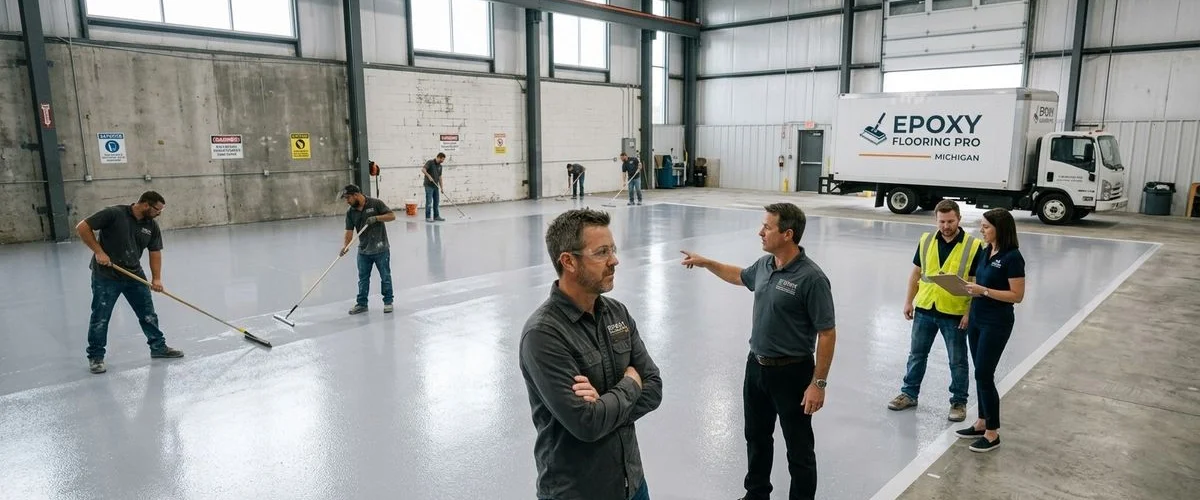
Concrete Rehabilitation: Repairing Decades of Chemical Damage
Warren’s industrial buildings have been in continuous manufacturing use for 50–70 years in many cases. Concrete that has been exposed to acids without adequate protection typically presents with:
Surface etching: The cement matrix dissolves, leaving aggregate exposed and the surface rough, weak, and highly absorbent. Moderate etching can be corrected by shot blasting to remove the damaged surface layer and achieve the required surface profile.
Pitting and cratering: More advanced acid attack creates pits and craters as the cement matrix dissolves unevenly, particularly around aggregate particles. These must be filled with epoxy or cementitious repair mortar to create a smooth, sound substrate before coating application. We see this frequently in Warren’s plating operations where acid contact has been ongoing for decades.
Deep structural damage: In severely neglected environments, acid attack can penetrate several inches into the concrete, weakening the structural slab. Assessment of structural integrity is required before coating decisions are made. Some Warren facilities with legacy chemical operations require partial slab replacement before coating work begins.
We assess the extent of damage honestly and recommend the appropriate repair approach — not the cheapest path that leaves the problem inadequately addressed.
Secondary Containment: The Complete Chemical Management System
A chemical-resistant floor coating protects the concrete. Secondary containment manages spills so they do not reach unprotected areas. The two systems work together to create a complete chemical management zone — essential for Warren facilities with EPA SPCC compliance requirements.
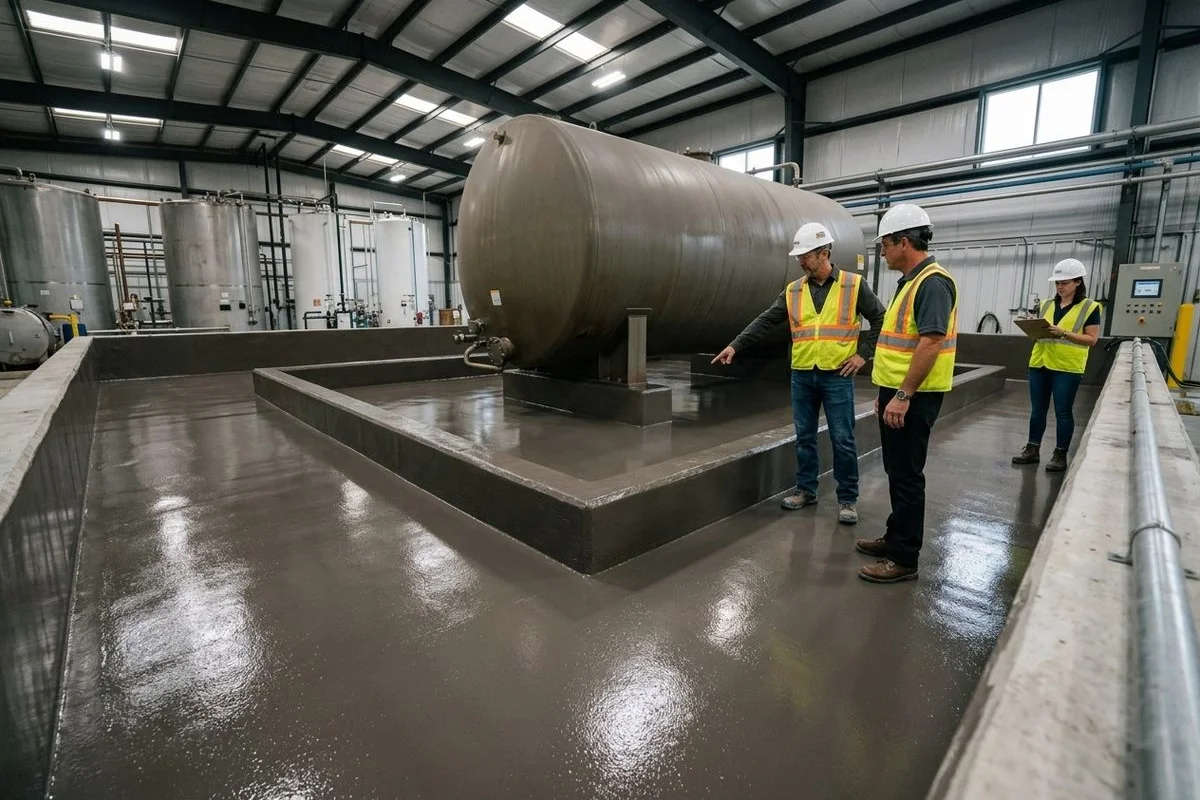
Our secondary containment installations use the same chemical-resistant system as the floor coating — novolac epoxy or vinyl ester — applied continuously from the floor surface up the containment berm and into the sump area. The cove base transition at the wall-to-floor joint receives the same treatment.
The result is a containment zone with no unprotected joints, transitions, or surfaces — a seamless chemical management system that intercepts every spill and directs it to a controlled sump for recovery or disposal.
Contact Epoxy Flooring Pro to discuss the chemical exposure profile at your Warren facility. We will specify the right system, document the chemical resistance basis, repair your damaged concrete, and install a floor that protects your operation for the long term.
What's Included
Our Chemical Damaged Floors Installation Process
Chemical Exposure Assessment
We document all chemicals that contact or may contact your floor: type, concentration, temperature, contact duration, and frequency. This drives the system specification.
Chemical Resistance Charting
We cross-reference your chemical exposure list against manufacturer resistance charts for novolac epoxy and vinyl ester systems to confirm the recommended system will perform against every identified chemical.
Concrete Damage Assessment & Repair
Acid-etched, pitted, and eroded concrete is assessed for depth and extent. Severely damaged areas are rebuilt with rapid-setting cementitious or epoxy repair mortars to restore a sound, level substrate.
Surface Preparation
Shot blasting or diamond grinding removes all damaged surface material, residual chemical contamination, and previous failed coatings. Surface profile is verified against system requirements.
Chemical-Resistant System Application
Novolac epoxy or vinyl ester system is applied in the specified build — primer, body coat(s), and chemical-resistant topcoat — with mil thickness verification at each stage.
Containment Integration & Cove Base
Secondary containment berms, sumps, and cove base transitions are installed as part of the system, creating a seamless, leak-proof containment zone from floor to wall.
Why Choose Epoxy Flooring Pro
Chemical Resistance Engineering
We do not guess at chemical resistance. Every system we specify is backed by manufacturer chemical resistance data for your specific chemicals. We provide the documentation confirming resistance before installation begins.
Novolac and Vinyl Ester Expertise
Standard epoxy is not appropriate for aggressive chemical environments. We have extensive experience with novolac epoxy and vinyl ester systems — the chemistry that performs where standard coatings fail.
Containment System Integration
Spill containment and secondary containment are part of our scope, not an afterthought. We integrate floor coatings with berms, sumps, and cove bases to create a complete chemical management system.
Concrete Substrate Rehabilitation
Chemical attack damages the concrete substrate before it damages the coating. We repair the concrete properly — rebuilding severely damaged areas with appropriate repair mortars — before the protective coating is applied.
Before & After
Before
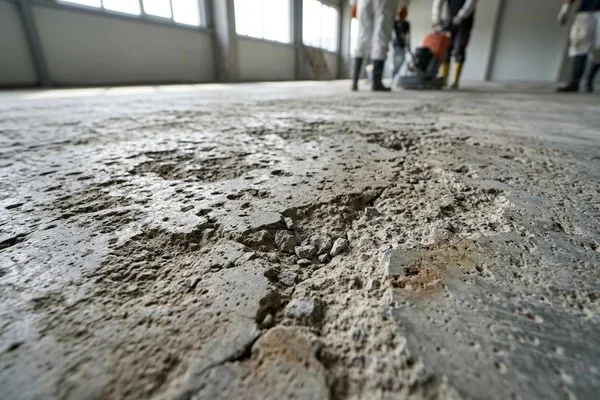
After
What Our Clients Say
"Our Warren plating operation had concrete that was severely pitted by decades of acid exposure. Epoxy Flooring Pro rebuilt the substrate, installed a novolac epoxy system matched to our specific chemical inventory, and integrated secondary containment. Two years later, the floor is in perfect condition — and our EPA inspection went smoothly."
"The battery charging area in our Mound Road warehouse had sulfuric acid damage that was destroying the concrete. Epoxy Flooring Pro charted resistance for every chemical we use, rebuilt the damaged areas, and installed a system that has performed flawlessly. Our safety audit findings went from three items to zero."
Frequently Asked Questions
What types of chemical damage do you see in Warren industrial facilities?
What is the difference between novolac epoxy and standard epoxy for chemical resistance?
How do you confirm a floor system will resist the chemicals in our Warren facility?
Can you repair concrete that has been severely damaged by acid in our Warren plant?
Do you install secondary containment in Warren chemical facilities?
What Warren industries typically need chemical-resistant flooring?
Get a Free Estimate for Chemical Damaged Floors
Our project managers are ready to assess your facility and recommend the optimal chemical damaged floors solution.