
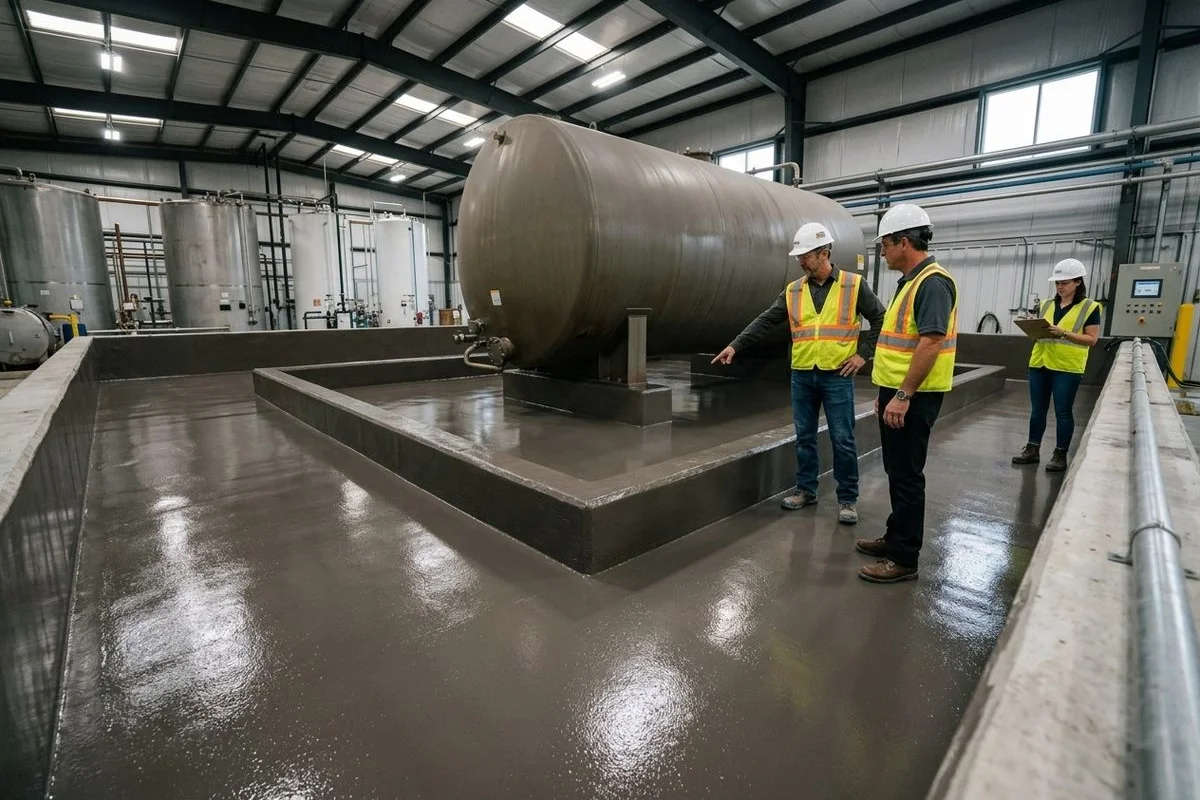
Containment Coatings & Tank Lining Systems in Warren, MI
Secondary containment linings, tank coatings, and sump linings for Warren's automotive, defense, and chemical processing facilities using novolac epoxy and vinyl ester systems.
Secondary Containment for Warren’s Industrial Operations
Warren’s concentration of automotive manufacturing, defense operations, and chemical storage creates significant demand for secondary containment systems that meet EPA, MIOSHA, and facility-specific compliance standards. From the solvent storage areas at automotive paint shops along Van Dyke to chemical containment at defense contractor facilities near the Detroit Arsenal, properly specified and installed containment linings are the last line of defense against environmental releases.
When primary containment — tanks, pipes, drums, and vessels — fails, the secondary containment lining must capture and contain the release. When that lining performs correctly, the incident is manageable. When the lining fails, chemicals reach soil, groundwater, or storm drains — triggering environmental enforcement, remediation costs, and regulatory consequences that dwarf the cost of proper containment.
Epoxy Flooring Pro installs secondary containment linings, tank coatings, and sump waterproofing systems using novolac epoxy and vinyl ester chemistry specified against your actual chemical exposure profile.
Chemical Resistance Engineering for Warren’s Exposure Profiles
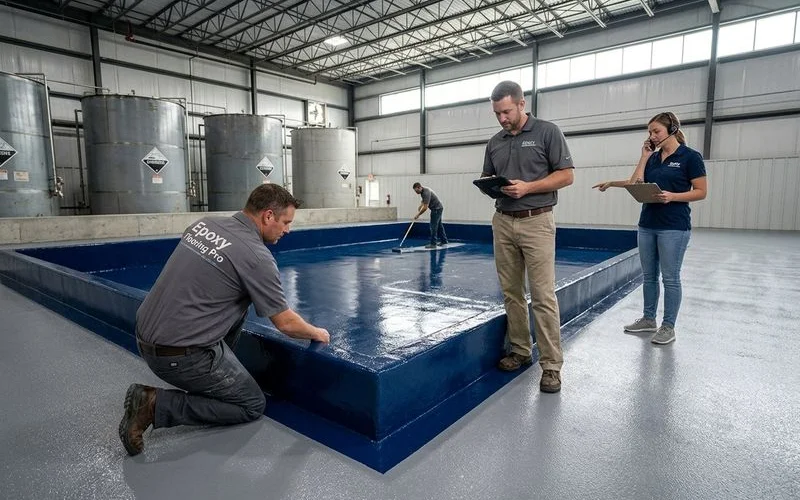
Warren’s industrial facilities handle a wide range of chemicals that require different containment coating chemistries. Selecting the wrong resin system is a failure waiting to happen — and a surprisingly common mistake.
Automotive manufacturing chemicals: Stamping operations at Stellantis’ Mound Road plants use hydraulic fluids, coolants, and lubricants. Paint shops handle aromatic solvents (toluene, xylene, MEK) that destroy standard epoxy. Battery manufacturing at GM’s Tech Center involves sulfuric acid and electrolyte solutions. Each exposure requires specific resin chemistry.
Defense facility chemicals: The Detroit Arsenal and TACOM operations handle fuels, lubricants, hydraulic fluids, and specialized military chemicals that require containment systems meeting federal environmental standards and often MIL-SPEC coating specifications.
Food distribution chemicals: Cleaning agents, sanitizers, and organic acids at Warren’s food distribution facilities require containment in chemical storage areas where concentrated solutions are mixed and dispensed.
We cross-reference your complete chemical inventory against manufacturer resistance data — confirming that the specified system will perform against every identified chemical at your Warren facility before installation begins.
Containment Details: Where Warren Projects Succeed or Fail
Containment coating failures almost always occur at details — joints, penetrations, coves, and transitions. These are the areas that require the most skill and the most attention. In Warren’s older industrial structures, construction joints, pipe penetrations, and sump connections are particularly vulnerable to chemical bypass.
Our approach to containment detail treatment includes:
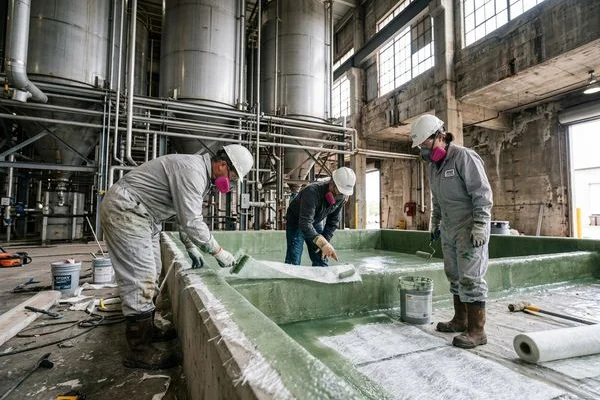
Fiberglass mat reinforcement embedded at all construction joints, expansion joints, and crack repairs — providing structural bridging capacity that prevents the primary coating from cracking at movement points. Critical in Macomb County where freeze-thaw cycling stresses containment structures.
Penetration collar installation at all pipe, conduit, and anchor bolt penetrations — sealing the transition between the penetrating element and the containment coating with chemical-resistant materials.
Cove formation at all floor-to-wall transitions — creating a seamless, inspectable radius that eliminates the 90-degree corner where chemical pooling and coating failure concentrate.
Holiday Testing: Non-Negotiable Quality Assurance
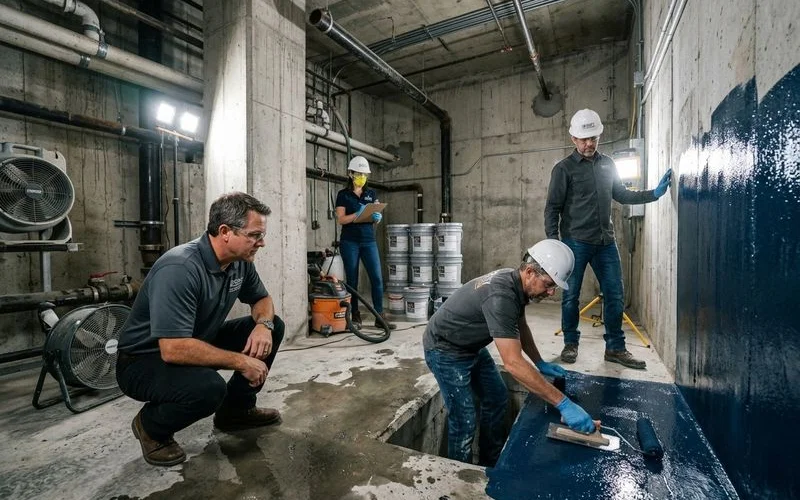
We perform holiday (spark) testing on every containment application in Warren as standard procedure. Holiday testing uses electrical spark devices to detect pinholes, thin spots, and voids in the coating film that would allow liquid chemical penetration to the substrate.
In our experience, even high-quality application work produces pinholes that are invisible to the naked eye. On containment applications — where the entire purpose of the coating is to prevent chemical contact with the substrate — a single undetected pinhole compromises the system.
All holidays detected during testing are repaired and retested before the project is accepted. For critical containment applications at Warren’s automotive and defense facilities, water flood testing of containment berms provides additional verification of system integrity.
Waterproofing for Warren’s Below-Grade Infrastructure
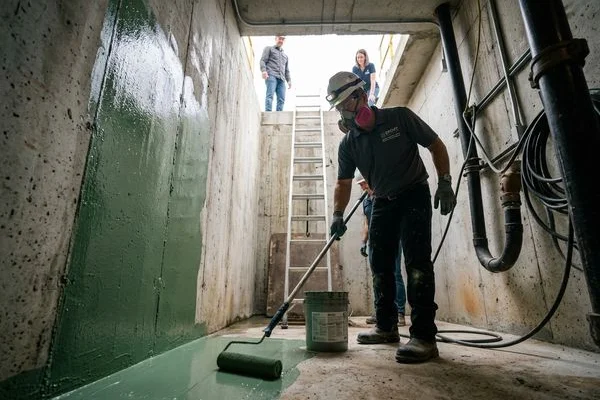
Warren’s below-grade utility vaults, sumps, and mechanical pits face a dual challenge: groundwater intrusion from Southeast Michigan’s high water table and potential chemical containment requirements. Our waterproofing systems for below-grade structures address both:
- Positive-side waterproofing to prevent groundwater infiltration through concrete walls and floor
- Chemical-resistant topcoat to protect against internal chemical exposure
- Crack bridging to accommodate the settlement and thermal movement common in Macomb County’s clay-based subsoils
For Warren facilities along the I-696 corridor and the Van Dyke industrial district, where groundwater levels can be high and chemical storage is common, integrated waterproofing and containment systems provide comprehensive protection.
EPA SPCC Documentation for Warren Facilities
Secondary containment systems at Warren’s industrial facilities are subject to EPA Spill Prevention, Control, and Countermeasure (SPCC) requirements. For every containment project, we provide complete documentation:
- Surface preparation records with profile measurements
- Coating product lot numbers and manufacturer data sheets
- Film thickness measurements at defined grid intervals
- Application temperature, humidity, and dew point records
- Holiday test results with locations and repair documentation
- Water flood test results (when performed)
This documentation supports your SPCC compliance records and provides evidence of due diligence during EPA or state environmental inspections at your Warren facility.
Contact our estimating team for a containment assessment at your Warren operation.
What's Included
Our Containment & Tank Installation Process
Chemical Exposure Analysis
We begin every containment and tank coating project by obtaining the complete list of chemicals stored or handled in the containment area — including CAS numbers, concentrations, temperatures, and exposure duration scenarios. We cross-reference this list against the chemical resistance data for multiple coating system options before recommending a specification.
Substrate Investigation and Defect Mapping
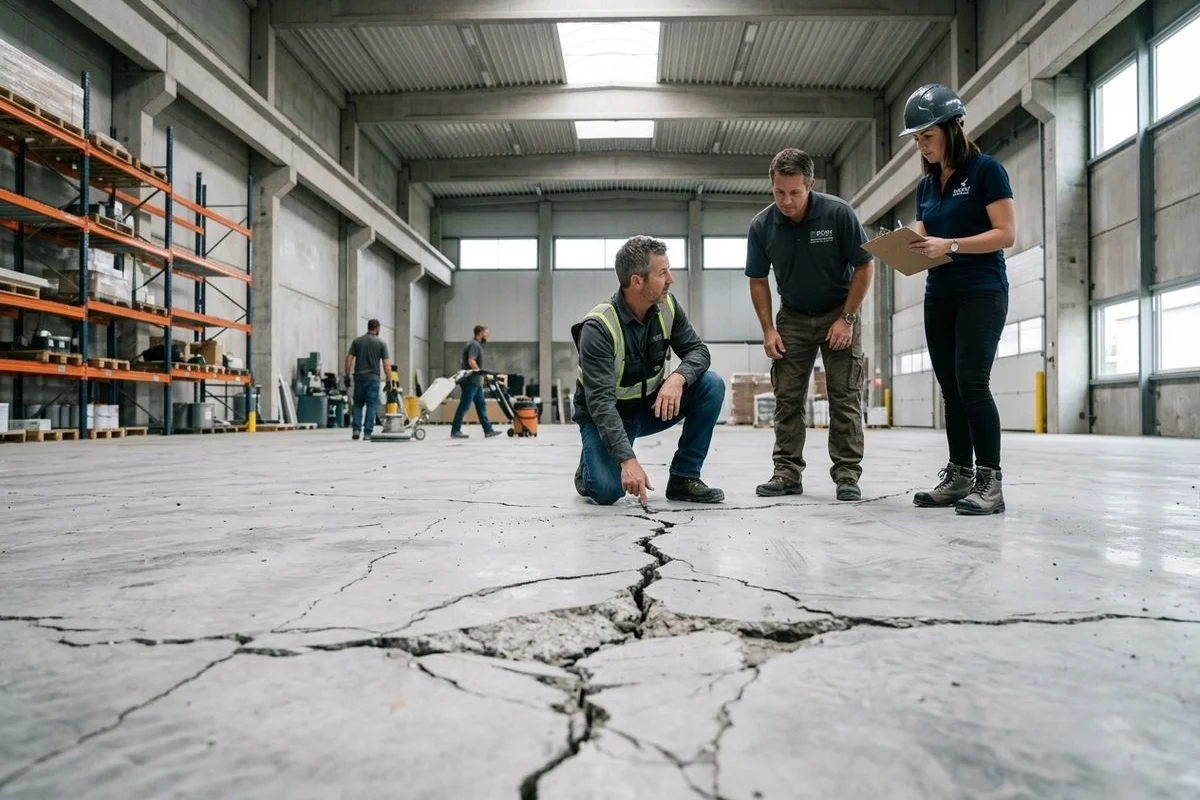
Containment structures and tank interiors are inspected for cracks, spalls, honeycombing, construction joints, penetrations, and existing coating failure. All defects are mapped and photographed. Moisture testing is performed — containment structures are often in contact with groundwater or subjected to hydrostatic pressure.
Surface Preparation to SSPC Standards
Concrete containment surfaces are prepared by shot blasting, grinding, or high-pressure water jetting to achieve ICRI CSP 4–6 for thick coating systems. Steel surfaces are abrasive blasted to SSPC-SP 10 or SSPC-SP 5 for immersion service.
Repair and Crack Bridging
All cracks, construction joints, and penetration details are treated before the primary coating is applied. Fiberglass mat reinforcement is embedded over all joints and transition details to provide bridging capacity in the primary coating system.
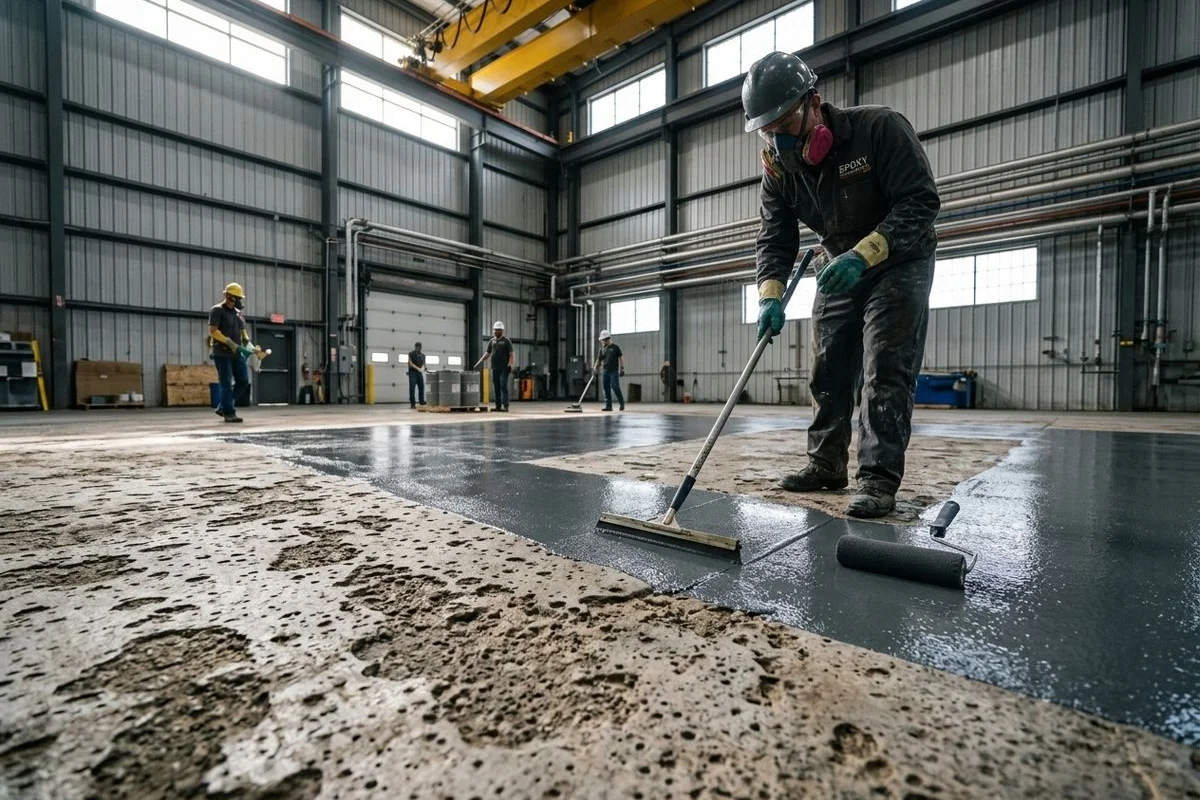
Primary Coating System Application
The specified coating system — novolac epoxy, vinyl ester, or standard epoxy — is applied in multiple coats to achieve the specified total dry film thickness (typically 40–120 mils DFT for primary containment applications).
Holiday Testing and Acceptance
Completed coating systems are subjected to holiday (spark) testing per NACE SP0188 to identify pinholes or voids. Any holidays detected are repaired and retested. Water flood testing of containment berms is available as final verification.
Why Choose Epoxy Flooring Pro
Chemical Resistance Expertise
Selecting the correct coating chemistry for chemical containment is a technical decision that requires knowledge of polymer chemistry and resistance data — not just catalog selection.
NACE-Informed Application Standards
Our containment and tank coating work follows NACE (now AMPP) surface preparation and application standards — the recognized technical authority for industrial corrosion protection coatings.
Detail Work is Our Strength
Containment coating failures almost always occur at details: joints, penetrations, coves, and transitions. Our crews are trained on detail treatment for containment applications.
Holiday Testing on Every Project
We perform holiday (spark) testing on every containment application as standard procedure — not an optional add-on. In a containment application, a single pinhole allows chemical penetration to the substrate.
Documentation for Regulatory Compliance
Secondary containment systems are subject to EPA SPCC requirements. We provide complete application documentation to support your regulatory compliance records.
Project Gallery
What Our Clients Say
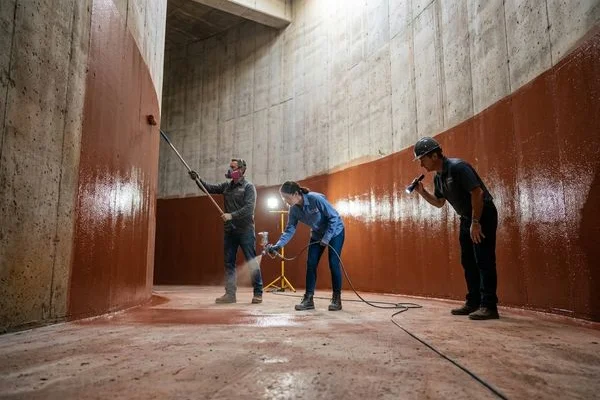
"Our Warren automotive paint shop needed the chemical storage berms relined after the previous coating failed against solvent exposure. Epoxy Flooring Pro specified novolac epoxy instead of the standard epoxy the last contractor used — the correct chemistry for our solvents. Eighteen months in service with perfect performance and a clean SPCC inspection."
"Our underground utility vault near the I-696 corridor was leaking groundwater through hairline cracks. Their crew treated the active leaks, installed crack bridging membranes, and applied a full waterproofing system. The vault has been completely dry for eight months."
"Holiday testing after the first coat revealed 12 pinholes we never would have found visually. Every one was repaired and retested before the next coat. That quality control matters for chemical containment. We trust this lining completely."
Frequently Asked Questions
What types of containment coatings do Warren's industrial facilities typically need?
What is the difference between novolac epoxy and standard epoxy for containment?
Is holiday testing required for containment coatings?
Can cracked concrete containment structures be effectively coated?
Do you provide documentation for EPA SPCC compliance?
Get a Free Estimate for Containment & Tank
Our project managers are ready to assess your facility and recommend the optimal containment & tank solution.