
OSHA-Compliant Floor Striping & Safety Markings in Warren, MI
OSHA-compliant floor striping, 5S lean markings, non-slip coatings, and pedestrian safety demarcation for Warren's manufacturing plants and distribution centers.
Safety Floor Markings for Warren’s Manufacturing Corridor
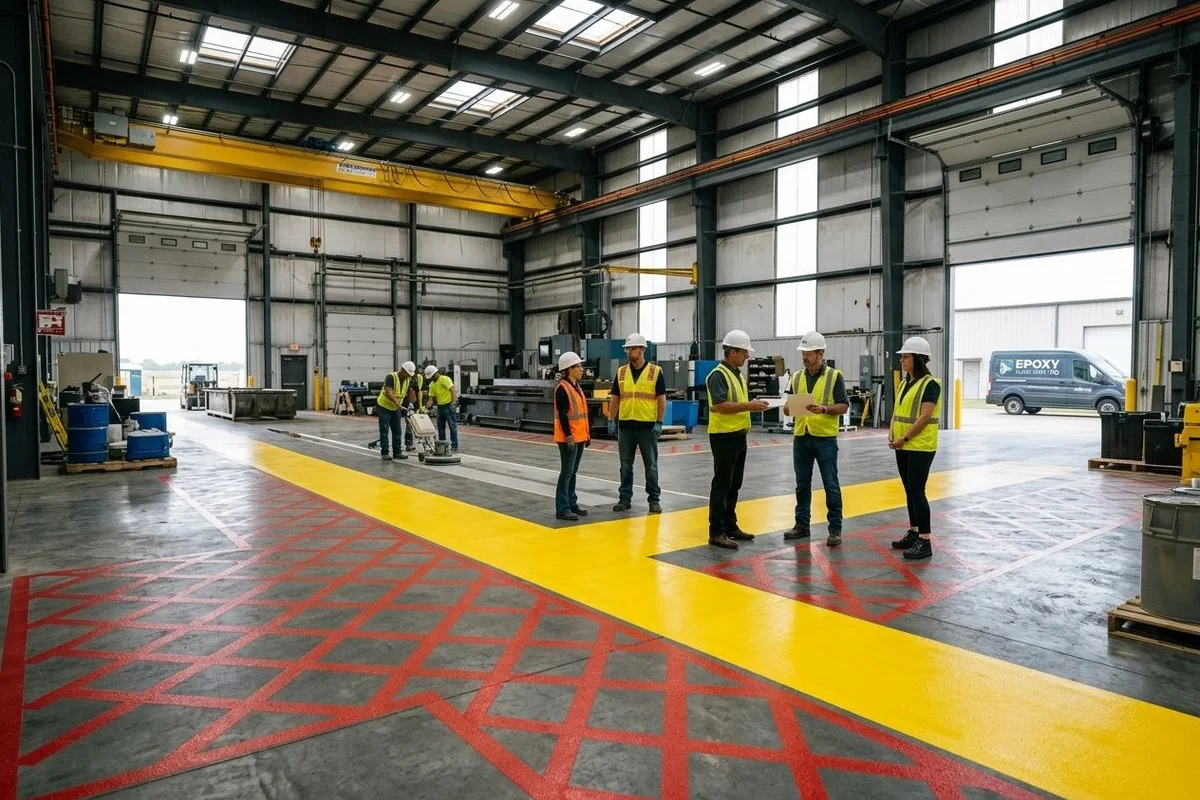
Warren’s industrial density — with major automotive plants, defense facilities, and distribution centers packed along Mound Road, Van Dyke Avenue, and the I-696 corridor — creates some of the highest-traffic industrial floor environments in Macomb County. Forklifts share floor space with pedestrians in stamping plants, distribution centers process thousands of pallet movements daily, and 5S lean manufacturing programs require precise visual organization on production floors.
In every one of these Warren facilities, properly marked floors are not optional — they are a regulatory requirement under OSHA 29 CFR 1910.22 and a critical component of workplace safety. Yet many facilities rely on standard traffic paint that wears through in months under forklift traffic, leaving faded, illegible markings that create exactly the confusion that causes incidents.
Epoxy Flooring Pro installs OSHA-compliant floor marking systems using high-build epoxy and fast-cure polyurea that outlast standard paint by a factor of five or more. We work with your Warren facility’s safety team to develop layouts that satisfy regulatory requirements and align with your operational logic.
Why Standard Paint Fails in Warren’s High-Traffic Plants
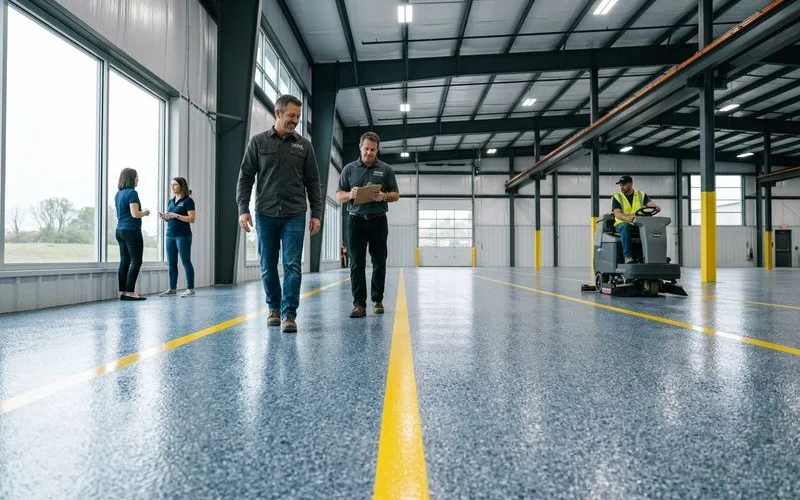
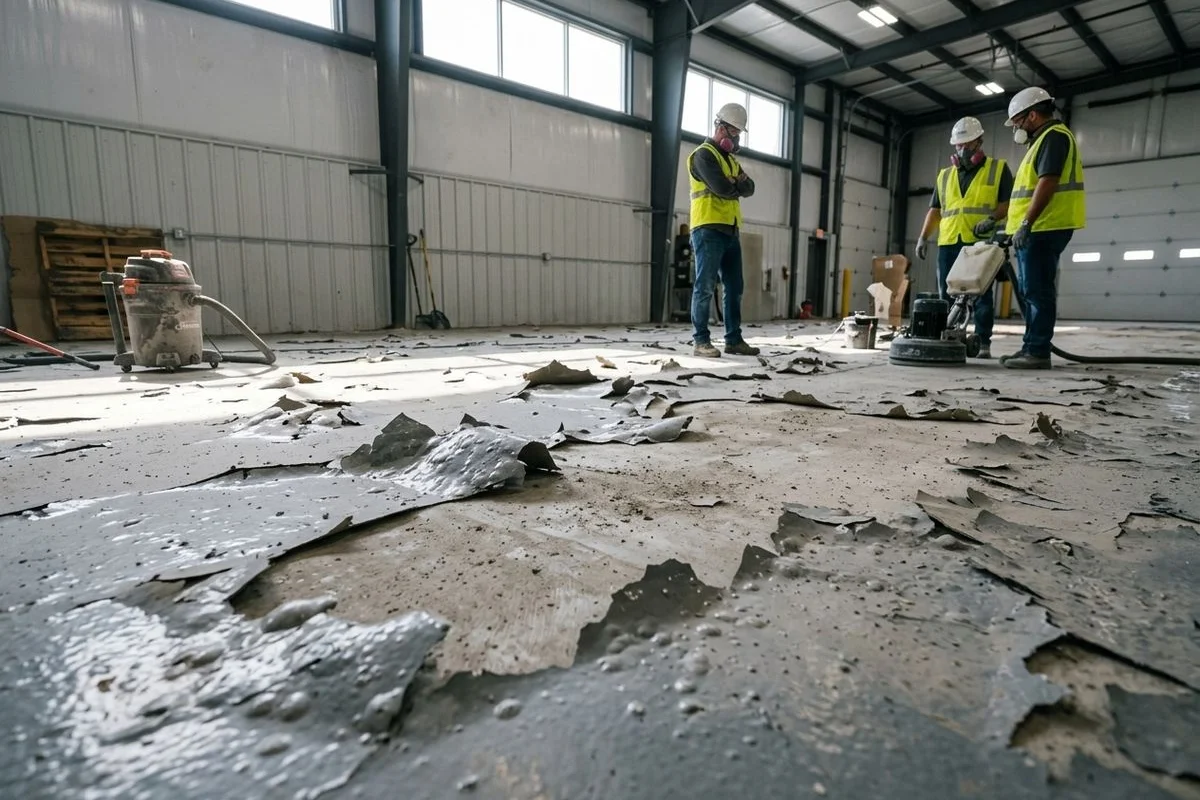
The root of the problem is simple: standard traffic paint is applied at 2–4 mils dry film thickness. Under the constant forklift traffic at Warren’s automotive suppliers, distribution centers, and manufacturing plants, that thin film wears through in 6–18 months. The facility then faces a choice: repaint (and repeat the cycle), or invest in a marking system designed for industrial conditions.
Our high-build epoxy and polyurea marking systems are applied at 20–30 mils DFT — 10 to 15 times the thickness of standard paint. The material bonds chemically to properly prepared concrete rather than sitting on top of it. In the high-traffic aisles of Mound Road Industrial Park warehouses and Stellantis supplier plants, our markings typically last 5–10 years before maintenance is needed.
The total cost comparison is straightforward: five years of quarterly repainting versus one professionally installed marking system that lasts the same period without maintenance.
5S Lean Manufacturing Markings for Warren’s Automotive Sector
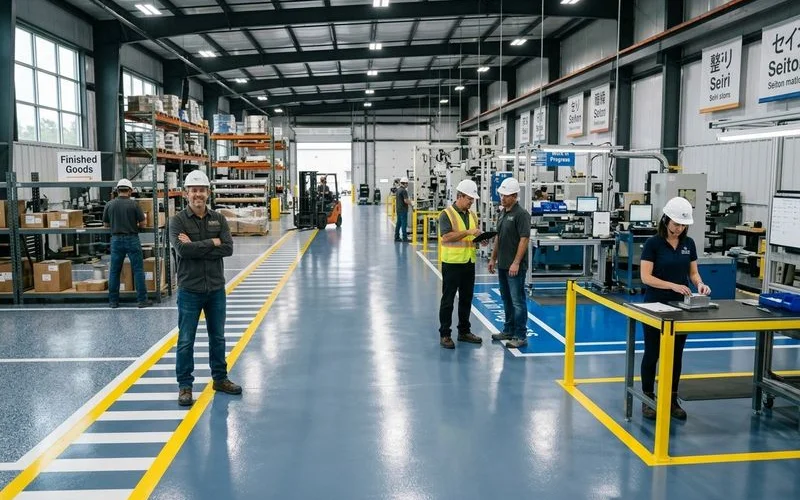
Warren’s automotive manufacturing ecosystem — driven by GM’s Technical Center engineering operations, Stellantis production facilities, and their extensive supplier networks — is heavily invested in lean manufacturing principles. 5S (Sort, Set in Order, Shine, Standardize, Sustain) floor markings are a core component of these programs.
A complete 5S floor marking installation in a Warren manufacturing facility typically includes:
- Workstation boundaries: White or yellow outlines defining each work cell’s territory
- Tool shadow positions: Floor markings showing exactly where mobile equipment belongs
- Material staging areas: Designated zones for incoming, WIP, and outgoing materials with capacity labels
- First-in-first-out lane markings: Flow arrows and lane designations for material movement
- Pedestrian flow paths: Clearly marked walkways separated from forklift traffic
- Emergency equipment zones: Red markings around fire extinguishers, electrical panels, and emergency stops
We work from your 5S layout documentation — or help develop the layout if you’re implementing the program from scratch. Our experience implementing 5S across Warren’s automotive supply chain means we understand the practical logic of floor marking layouts in manufacturing environments, not just the application mechanics.
Pedestrian Safety in Warren’s Busiest Facilities
Forklift-pedestrian separation is the highest-priority safety marking requirement in Warren’s industrial facilities. The combination of heavy forklift traffic, shift changes with dozens of workers on the floor simultaneously, and complex traffic patterns through multi-bay manufacturing facilities creates genuine hazard conditions.
Our pedestrian safety marking systems for Warren facilities include:
- High-visibility pedestrian corridors with 4-inch yellow boundary stripes and anti-slip coating within the walkway
- Forklift crossing points with chevron warning patterns and stop/yield markings
- Loading dock separation between truck loading operations and pedestrian access
- Emergency egress paths marked per NFPA and local fire code requirements
For Warren facilities where MIOSHA enforcement is active and OSHA General Duty Clause compliance is non-negotiable, our documented installation records provide the evidence your safety program requires.
Integration with Larger Coating Projects
Many Warren facilities combine floor striping with larger epoxy coating or polished concrete projects. When striping is part of a comprehensive floor renovation, we integrate the marking design into the overall system specification — ensuring stripes are properly embedded in or applied over the coating system without delamination risk at the interface.
This is especially common in Warren warehouse-to-distribution conversions and facility renovation projects along the I-696 industrial corridor, where a complete floor system — coating, striping, and non-slip treatment — is installed as a single coordinated project.
Contact our team to schedule a facility safety assessment at your Warren location and receive a compliant marking layout plan.
What's Included
Our OSHA Safety Striping Installation Process
Facility Safety Assessment and Layout Design
We review your existing floor layout, pedestrian traffic patterns, forklift routing, emergency egress paths, and any OSHA citations or audit findings related to floor markings. Working with your safety manager, we develop a striping layout plan that addresses all regulatory requirements and operational logic before any marking begins.
Surface Preparation and Cleaning
Existing worn striping, oil contamination, and surface laitance are removed by diamond grinding or scarifying in the stripe paths. Proper surface preparation ensures the new marking material bonds to concrete rather than to a contaminated surface — which is why painted lines fail within months while our epoxy markings last for years.
Layout and Marking
Stripe paths are laid out using chalk line and measuring tools against established reference points. For 5S programs and shadow board locations, we work from your CAD drawings or help you develop the layout from scratch. Complex shapes, logos, and graphics are masked using precision tape before material application.
Epoxy or Polyurea Application
High-build epoxy or fast-cure polyurea is applied by roller to the prepared, masked stripe paths. Stripe thickness is specified to survive forklift traffic — typically 20–30 mils DFT, far exceeding the 2–4 mils of standard traffic paint. Anti-slip aggregate is broadcast into the wet material in pedestrian zones.
Topcoat and Anti-Slip Application
Where anti-slip performance is required, aluminum oxide aggregate is broadcast into the wet material and back-rolled to embed the particles before an additional sealer coat locks the aggregate in place.
Final Inspection and Documentation
Completed markings are inspected against the approved layout plan. We provide a photographic record of all installed markings and a written report confirming compliance with OSHA 29 CFR 1910.22 requirements. Documentation can be included in your OSHA compliance records.
Why Choose Epoxy Flooring Pro
OSHA Regulatory Knowledge
We know the OSHA standards applicable to industrial floor markings — CFR 1910.22, 1910.136, and 1910.178 for powered industrial trucks. We identify gaps between your current layout and regulatory requirements and help you close them.
Materials That Outlast Paint
Standard floor paint fails rapidly under forklift traffic. Our high-build epoxy and polyurea systems are 10–15 times thicker and bond chemically to the concrete substrate. In high-traffic areas, our markings typically last 5–10 years compared to 6–18 months for paint.
5S Implementation Experience
We have implemented 5S floor marking systems for lean manufacturing facilities across multiple industries. We understand the logic of home positions, shadow board locations, material staging areas, and first-in-first-out lane markings.
Minimal Operational Disruption
Floor striping does not require facility-wide shutdown. We work section by section, completing and reopening each zone before moving to the next. Polyurea systems return to service in 1–2 hours.
Integrated with Coating Projects
When striping is part of a larger coating or [polished concrete](/polished-concrete/) project, we integrate the striping design into the overall system specification.
What Our Clients Say
"Our Mound Road manufacturing plant received an OSHA citation for inadequate aisle markings. Epoxy Flooring Pro understood exactly what the citation required, developed a compliant layout plan, and completed the installation over a single shutdown weekend. We passed the follow-up inspection without any additional findings."
"We implemented a full 5S lean program at our Warren assembly operation. Epoxy Flooring Pro installed every shadow board location, home position marker, and flow lane exactly as specified. Fourteen months of constant forklift traffic and the markings look like new."
"Our distribution center off I-696 had virtually no pedestrian separation from forklift traffic. Epoxy Flooring Pro assessed our traffic patterns, designed a sensible aisle layout, and installed the full system in two nights without stopping pick operations. Safety incidents in marked areas dropped to zero."
Frequently Asked Questions
What does OSHA require for floor markings in Warren industrial facilities?
How durable are epoxy floor markings compared to paint?
Can floor markings be installed while our Warren plant continues operating?
What is the OSHA color coding system for floor markings?
Do you offer 5S floor marking for lean manufacturing in Warren?
Get a Free Estimate for OSHA Safety Striping
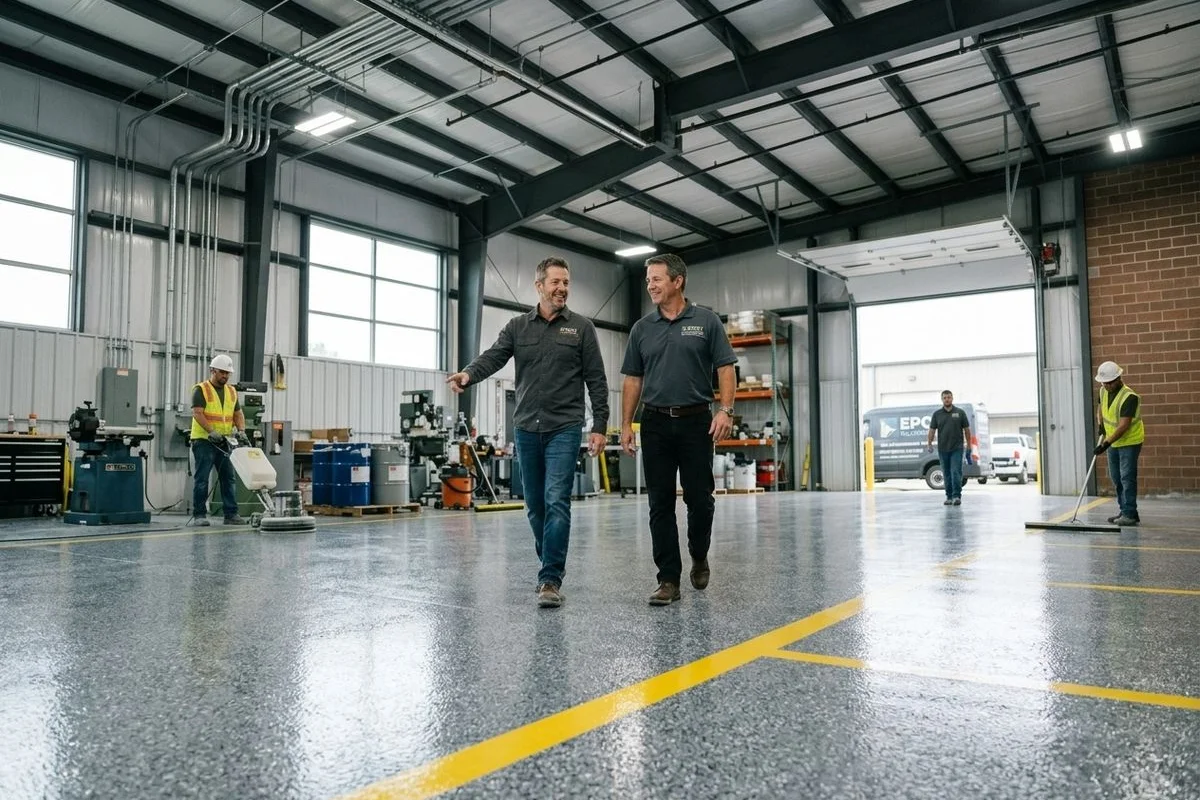
Our project managers are ready to assess your facility and recommend the optimal osha safety striping solution.